Concrete Driveway Installation
Poured concrete driveways with proper reinforcement, joints and finishes.
Learn MorePlenty of slabs split open before they've made it through one summer. Bad mix? Almost never. The dirt underneath is where the trouble starts.
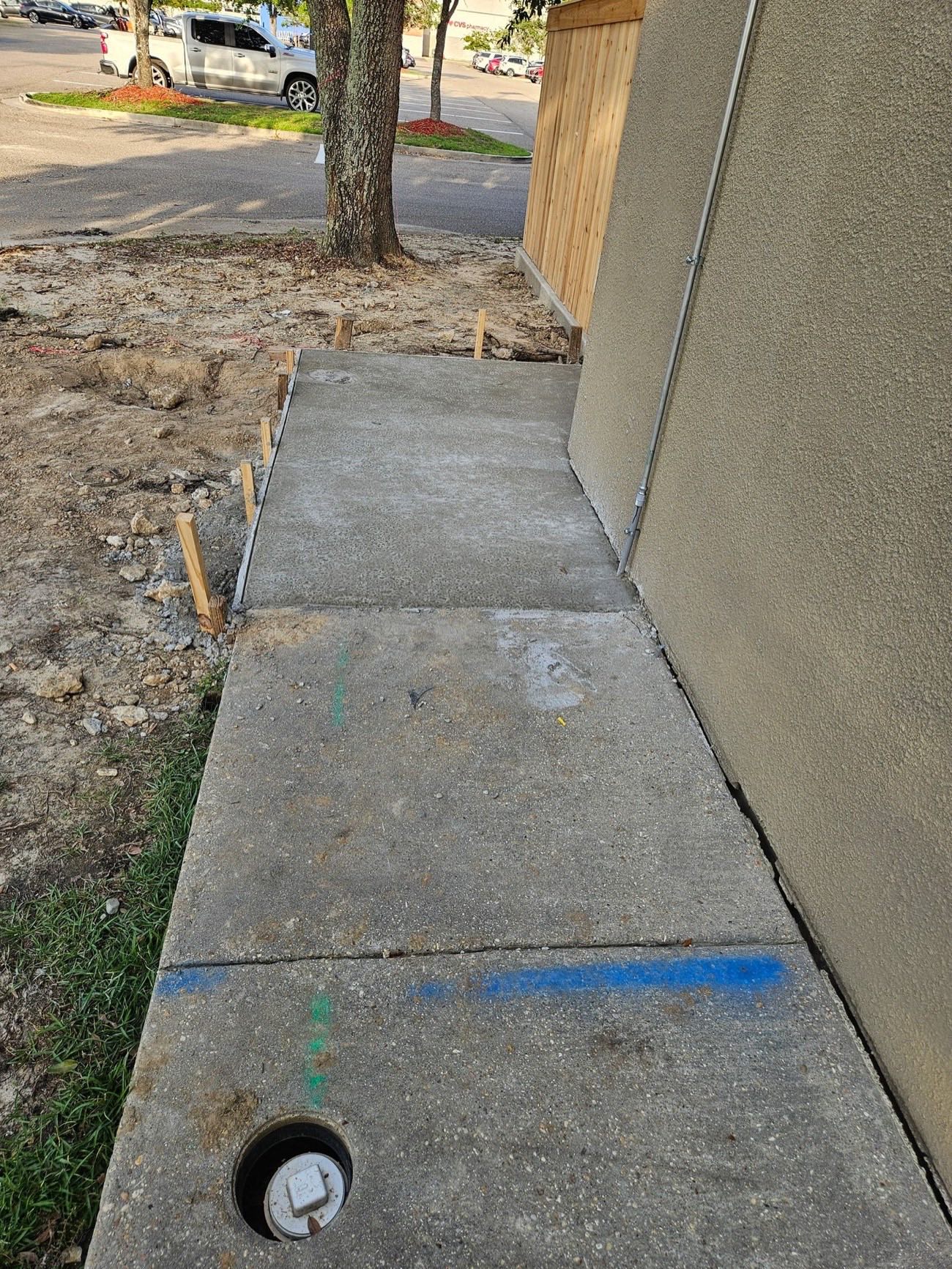
Sitting on expansive clay and soaking up better than 60 inches of rain every year, this city is rough on concrete. Wet clay puffs up. Dry clay shrinks back down and walks right out from under a thin pad that nobody prepped properly. There's a shed pad off Perkins Rd we got called out to look at, and after one soggy spring the thing rocked like a seesaw.
Dirt comes first on every concrete slab in Baton Rouge we put down: soil work, compaction, drainage, the right thickness, steel where it belongs and joints cut where they'll actually do something. Private jobs get built to Louisiana DOTD grade standards by our crews, and the client list includes FedEx, Academy Sports and Regions Bank. Text or call (225) 464-5378 and we'll get you a free written estimate.
Call (225) 464-5378Prefer to talk? Call (225) 464-5378 (LA) or (601) 769-8687 (MS). Mon–Sat, 8 AM–6 PM.
No two pours are spec'd the same. Here's what our guys are building most weeks across the Capital Region: Same in house crew does the house work and the business work. Nobody hands your job to a sub you've never met.
Whatever the heaviest wheel is that'll ever roll across that slab, that's what sets the thickness. Not a guess. Not a round number somebody likes.
| Slab Use | Typical Thickness | Typical Reinforcement | Built For |
|---|---|---|---|
| Shed or patio pad | 4 inches | Wire mesh or light rebar | Foot traffic, light storage |
| Garage or carport slab | 4 to 5 inches | Rebar grid | Cars, light trucks |
| Equipment or generator pad | 5 to 6 inches | Rebar, anchor bolts | Point loads, vibration |
| Dumpster pad | 7 to 8 inches | Heavy rebar grid | Fork strikes, front load trucks |
| Warehouse or shop floor | 6 inches and up | Rebar or fiber plus mesh | Racking, lifts, pallet jacks |
| Truck and delivery area | 8 inches | Heavy rebar, doweled joints | Loaded semis, turning stress |
Your written estimate spells out the exact build before a single truck spins its drum.
Steel never stopped a slab from cracking, and anybody who tells you otherwise is selling something. What it does is clamp the pieces together so a hairline stays a hairline instead of spreading into a gap. Load bearing pads get a rebar grid sitting up on chairs, which keeps the steel inside the concrete rather than buried in mud.
Curing concrete shrinks. Always has. Cut joints hand that shrinkage a straight line to follow instead of letting it wander. Saw cutting happens early with us, usually inside the first day, and the spacing gets tied to slab thickness so the pattern isn't just decoration.
Where fresh concrete butts up against an old driveway or an existing shop floor, dowel bars get drilled and epoxied into that old edge. Both sides then move as one instead of one side climbing past the other. Leave the dowels out and inside a year you've got a lip that catches toes and mower wheels. Ready for a straight answer on your slab? Call or text Gulfline Paving at (225) 464-5378 for a free written estimate, no obligation.
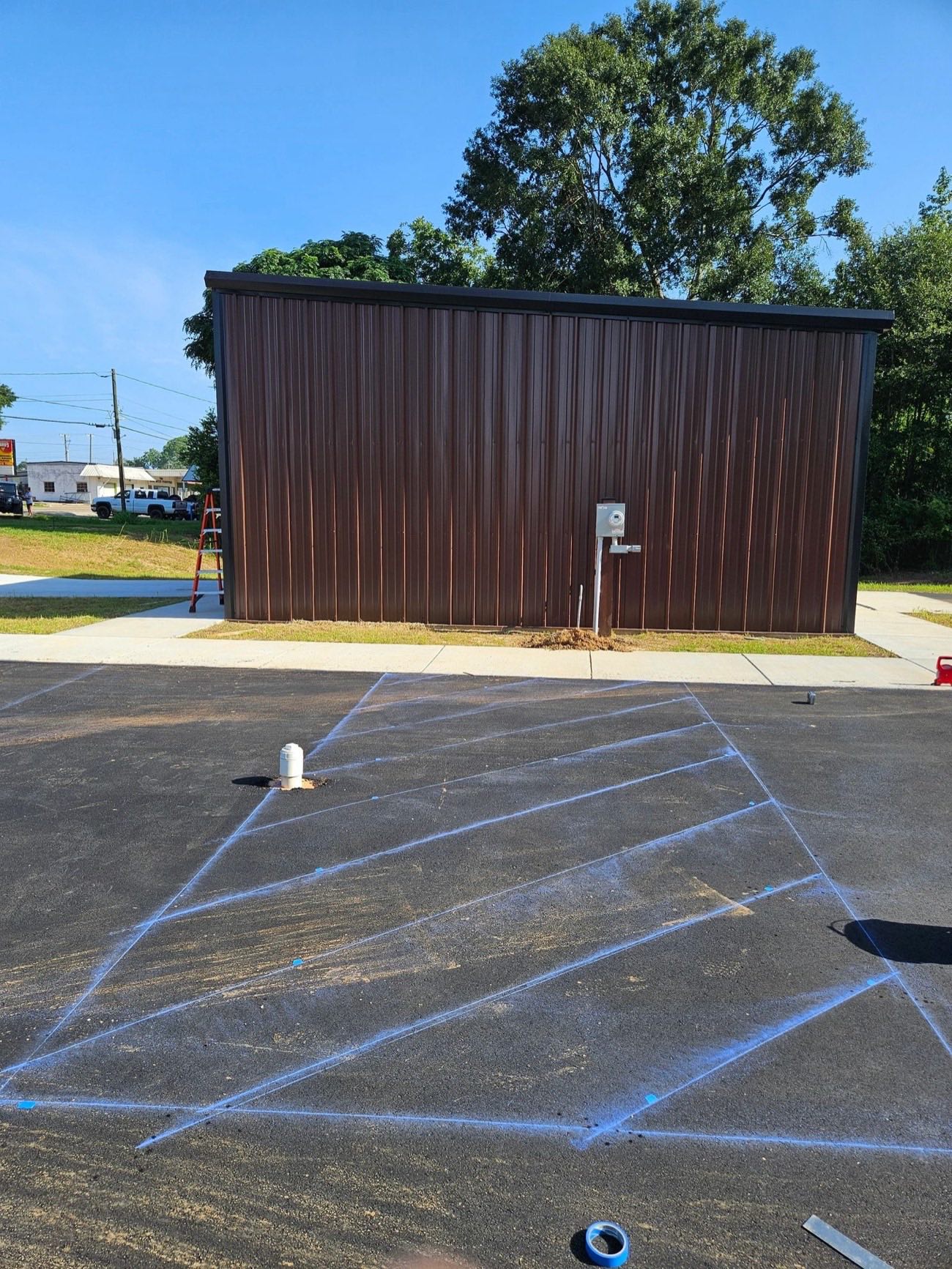
Down here, water does the damage. Grading comes before forms, always, so runoff heads off the pad instead of pooling underneath it.
Soft topsoil gets stripped. Select fill comes in and gets compacted, then we proof roll the whole pad so any mushy spot announces itself before the pour instead of six months after. Out toward Denham Springs and Central we've hit wet sites where the clay flat refused to compact, and the fix was undercutting and stoning the pad back up. That one extra day in the dirt is the difference between a slab that stays flat for thirty years and one that doesn't.
Day or two and you can walk on it. Cars, give it roughly seven days. Loaded trucks need longer, and we'll give you the actual date rather than a shrug.
Step 1. Layout and forms. Stakes go in, forms go up, slope gets set so water runs where it should.
Step 2. Steel and inspection. Mesh or rebar up on chairs, dowels drilled anywhere they're needed.
Step 3. Pour and screed. Concrete goes down, gets screeded flat, then floated.
Step 4. Finish. Broom, hand trowel or power trowel, depending on what the slab is for.
Step 5. Saw cut and cure. Joints cut early, cure applied so the Gulf heat doesn't win.
Step 6. Cleanup and walkthrough. Site gets cleared, then you and the foreman walk the slab together.
New construction slabs bring footings, vapor barrier and anchor bolts set exactly to the plan sheet. Shops, room additions and light commercial buildings all over the Capital Region get their foundations poured by our crews.
Think of a driveway as a slab that eats weather and wheel loads seven days a week. Base gets built right, slope carries water to the street, and joint spacing keeps the cracking where we put it.
Business slab work usually drags asphalt work along with it. Both divisions run in house here, so your dumpster pad, apron and lot paving land on one schedule with one guy answering the phone.
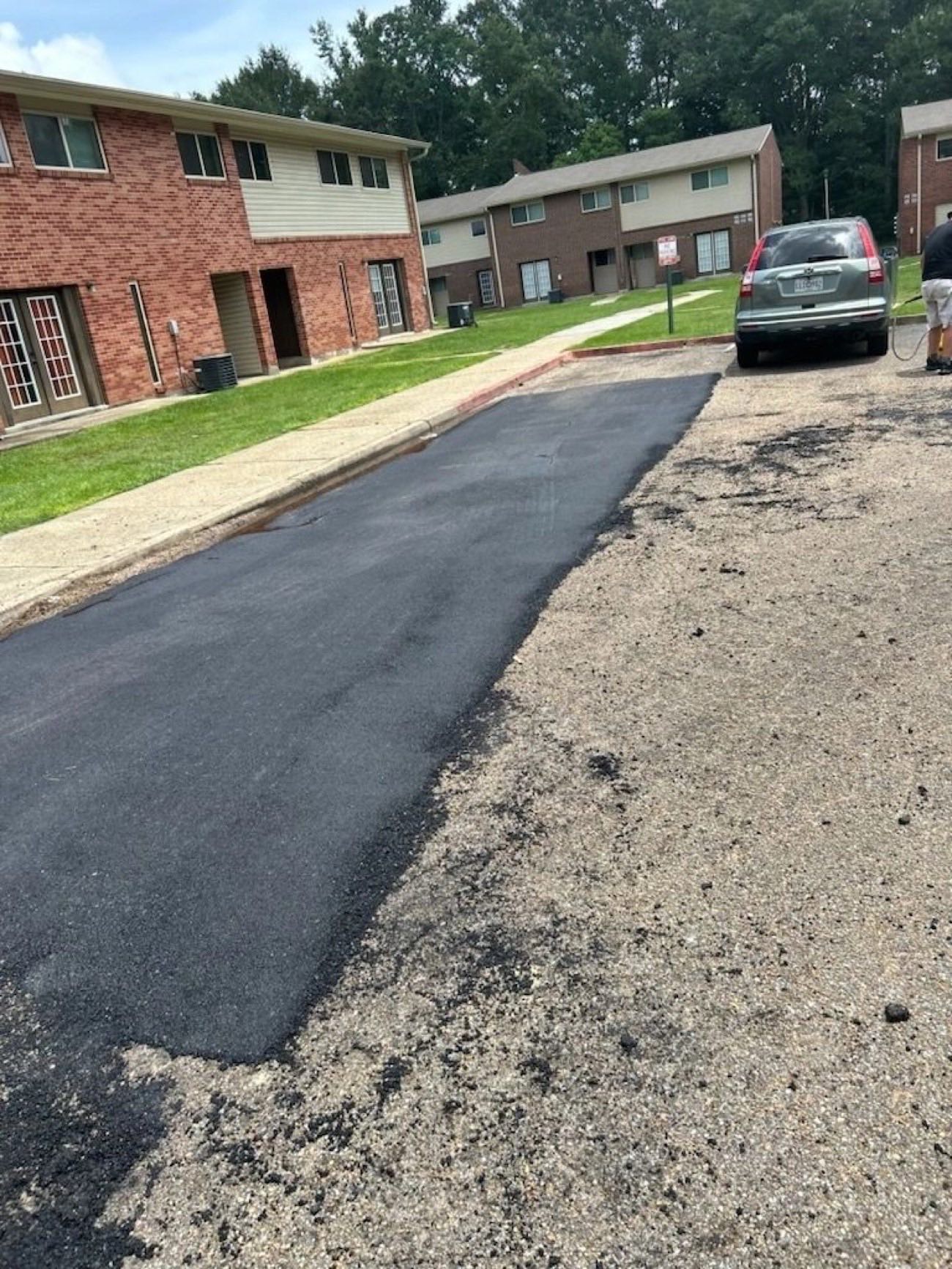
Headquarters sits on the Airline Hwy corridor, and the Capital Region is where our trucks are every single week. FedEx, Academy Sports, Regions Bank, the Louisiana National Guard, O'Reilly and Advance Auto Parts are all in the portfolio.
Licensed and insured in Louisiana, top to bottom. Got a business that can't afford to close? Pours get phased at night or over a weekend so your doors stay open. Estimates are written out, itemized and cost you nothing.
Out of the Baton Rouge yard, our crews pour slabs and pads across the whole Capital Region:
Still have a question about your driveway, lot, or sitework? Call the Louisiana office and talk to someone who actually runs the jobs.
Poured concrete driveways with proper reinforcement, joints and finishes.
Learn MoreConcrete patios formed and finished for Louisiana clay and weather.
Learn MoreDecorative stamped patterns and color for patios, walks and pool decks.
Learn MoreTell us the slab size and what's going on top of it. From there we walk the site, look hard at drainage, and hand you a written estimate that spells out thickness, steel and joint layout. Nothing owed, nobody chasing you. Get the Gulfline Paving crew at (225) 464-5378 or use our Baton Rouge estimate request page. Hours are Monday through Saturday, 8 AM to 6 PM, and once the dry stretch hits, that calendar fills up quick.
We use cookies to improve your experience, analyze site traffic, and for marketing. By clicking “Accept”, you consent to our use of cookies. Privacy Policy.